Future-proofing real estate: Insights from climate risks event
Published
Subject
Event
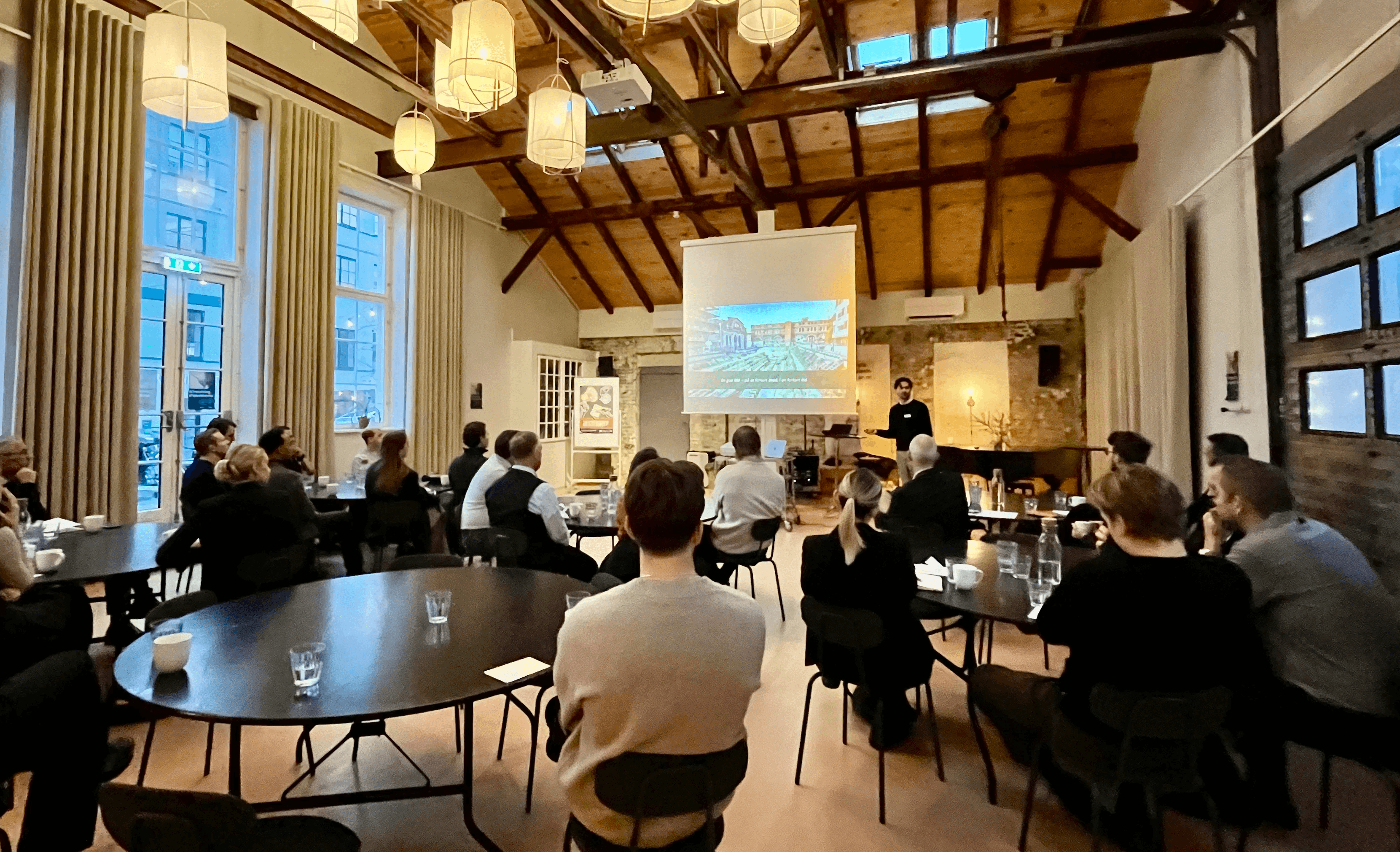
Climate-proofing of properties was the focus on November 20, 2025, when Upsite invited industry professionals to a morning seminar.
The day offered sharp insights from experts, exciting cases, and practical tools showing how to both meet the rising requirements and exploit the strategic opportunities in making properties more resilient to climate change.
Climate change is no longer a distant threat
Climate change is already clearly felt in Denmark. While other countries struggle with heatwaves and drought, it is our buildings, cities, and infrastructure that are increasingly challenged by water. Cloudbursts, storm surges, and rising groundwater are no longer rare events, but a new reality that both property owners and investors must address.
At the same time, the EU, government, municipalities, financial institutions, and insurance companies are tightening the requirements for documenting the robustness of properties. Climate-proofing is therefore no longer something that can be postponed - it is a prerequisite for compliance, operational reliability, and value creation.
With this development as the driving force, Upsite gathered industry professionals for a seminar where three experts shared knowledge, concrete tools, and future perspectives on climate-proofing existing buildings. The day's presentations made it clear how important this area is, and how much potential lies in working systematically with data, documentation, and risk assessments.
Climate risk analysis as a decision-making tool
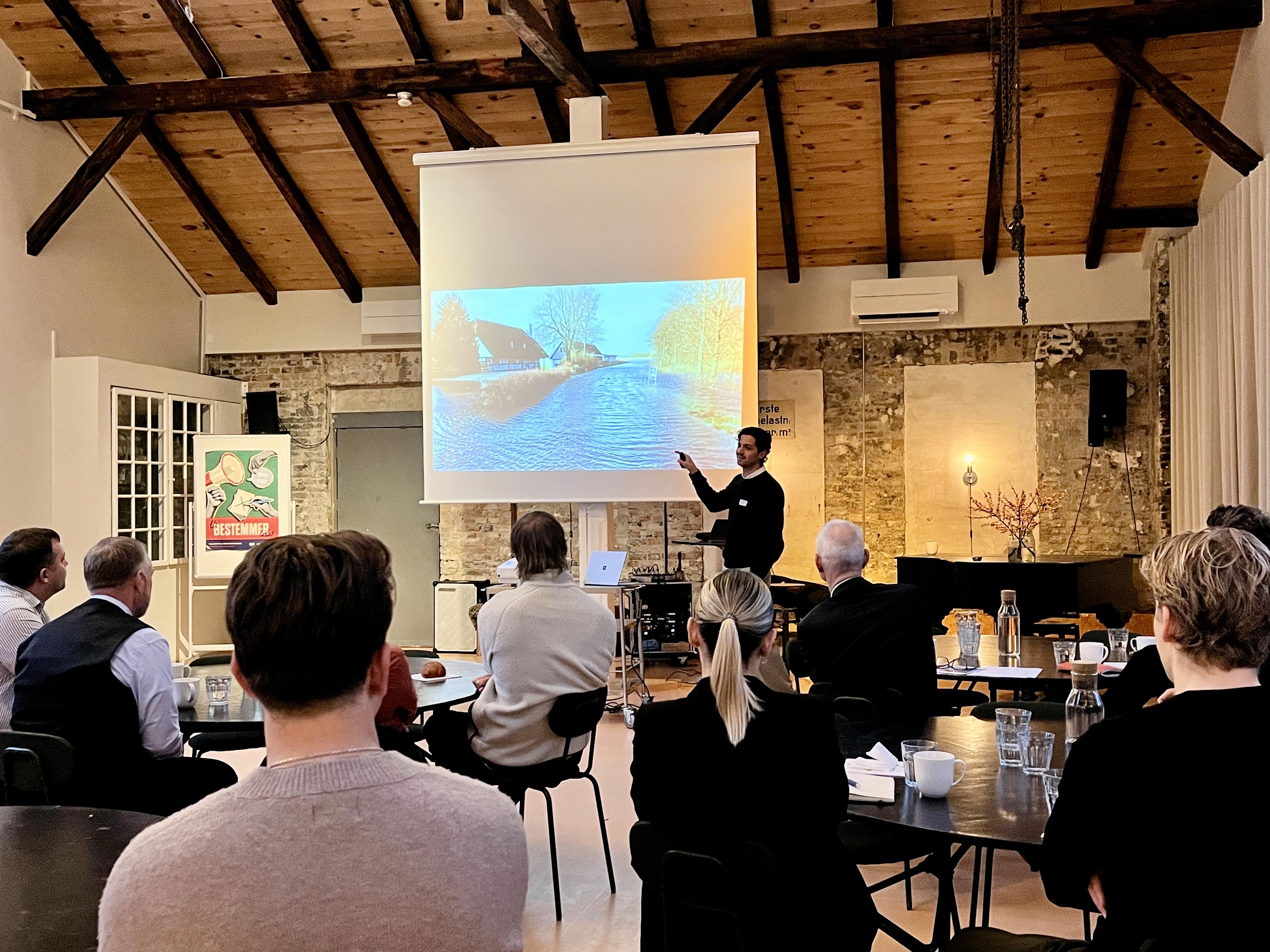
Magnus Schrøder Pedersen, Area Manager for Circularity in Buildings at Transition ApS, opened the day by outlining the regulatory framework and the potential consequences of a lack of climate adaptation. He also gave a thorough introduction to working with climate risk analyses - from identifying climate exposures to projections, vulnerability and risk assessments, as well as concrete climate adaptation solutions.
A consistent message from Magnus was that we must document thoroughly, be transparent, and not only describe what we do, but also what we choose not to do and why. The quality of the analysis and the decisions it is meant to support depend on a solid knowledge base. This applies to both selections and exclusions.
Magnus reminded us that it is precisely in the preliminary investigations that this foundation is created: insight into the building's condition, potential, and challenges, so that we can set realistic goals and make good climate adaptation decisions.
Be prepared for future climate requirements
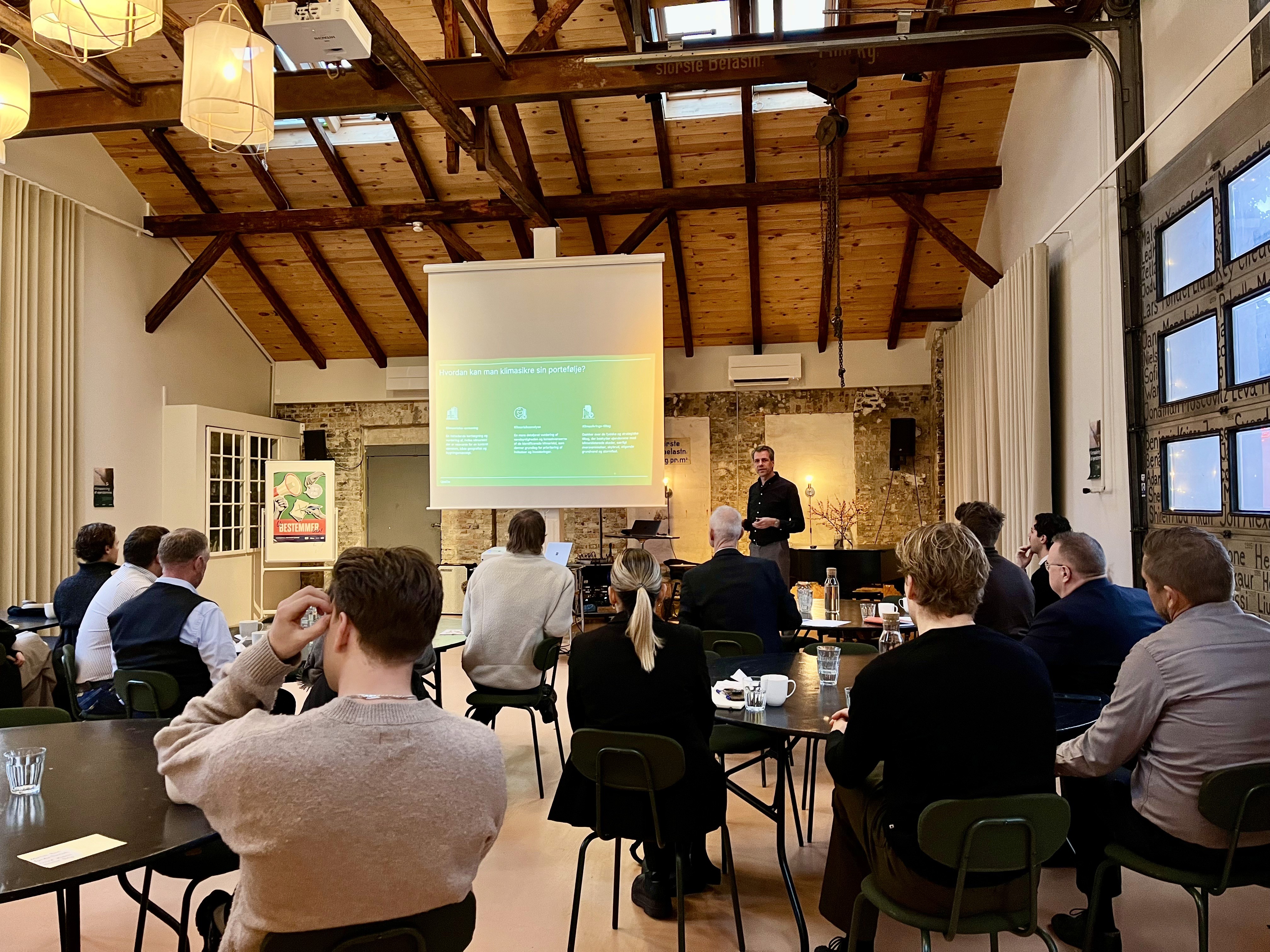
Søren Schødt delivered a clear message on the importance of knowing your properties and being well prepared. He shared how Upsite works systematically with property data and task management as a foundation for operations, maintenance, energy optimization, and of course, climate-proofing. The more documentation you can present, the stronger your position with stakeholders, whether they are auditors, banks, or other authorities requesting transparency.
A solid data foundation does not just provide an overview here and now. It is also crucial for being able to live up to upcoming legal requirements and the growing expectations of financial institutions. In the end, it is about being as well-prepared as possible, both for what we already know and what we do not yet know about future requirements and climate risks.
Climate risk plays a role in credit assessment
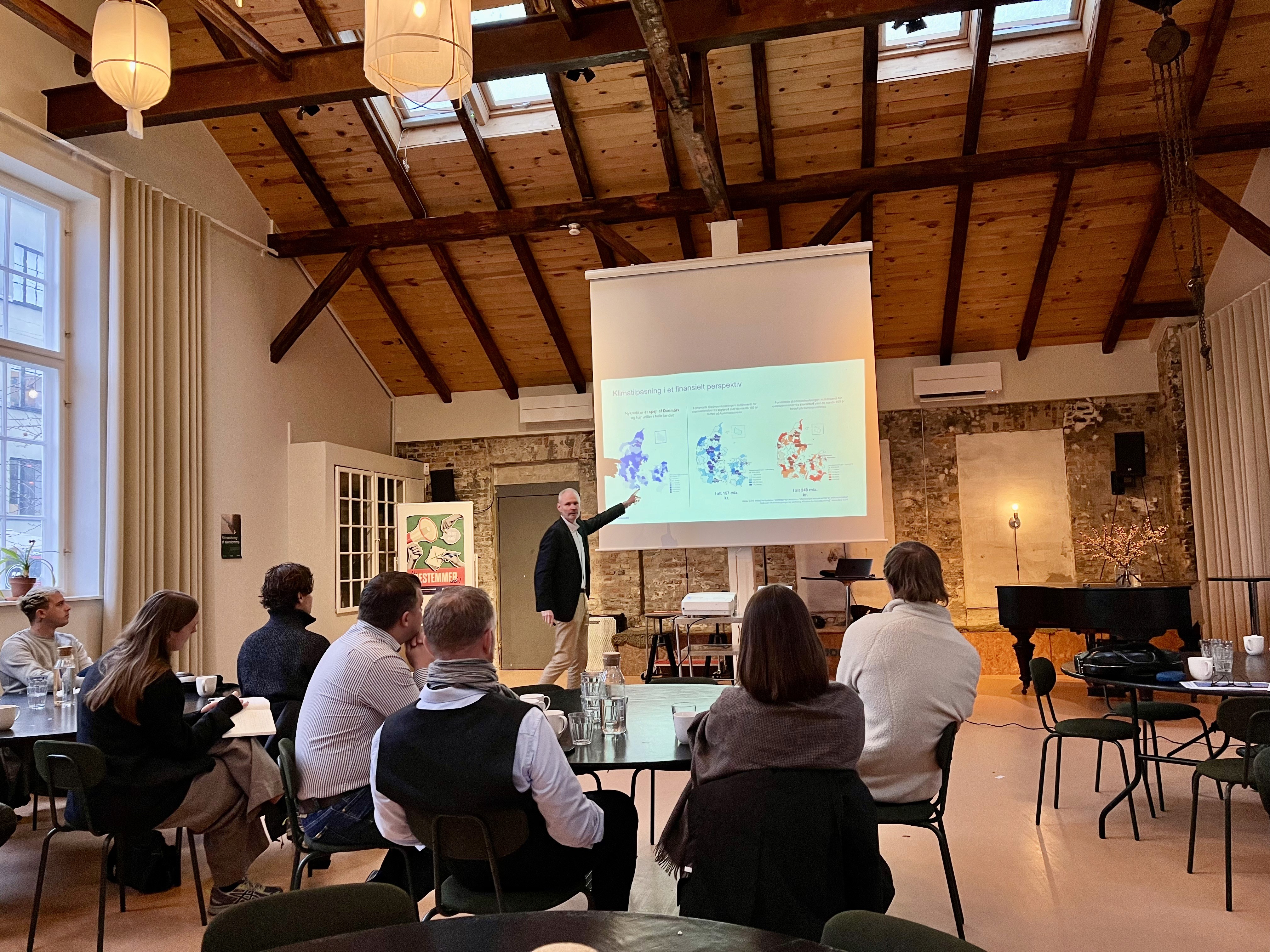
Jakob Wind-Hansen, Deputy Director and Head of Real Estate at Nykredit, emphasized that property owners should already start the process of documenting their properties' climate risks.
In June 2025, the proposal for the new law L193 was passed, meaning that financial companies must henceforth prepare ESG transition plans for their borrowers. In his presentation, Jakob focused on the law's requirements and the economic dimension of climate-proofing, including what this means in practice for property owners.
A climate risk analysis is not only automated for the benefit of the climate; it is also a statutory obligation under legislation and a factor that banks and investors already weigh heavily in their assessments. Nykredit is experiencing an increasing need for clients to gain a concrete overview of where their properties are most exposed. This is the first step toward timely planning and action, as well as a central element in the green transition.
It also became clear that climate risks already play a significant role in both credit assessment and valuation, and that this importance will only grow in the future.
Climate risk is both a requirement and a strategic opportunity
Climate risk is not just about avoiding damage and meeting upcoming requirements. It is also a strategic opportunity to strengthen property portfolios, create transparency for investors, and secure future value. This was clear after today's presentations.
Thorough documentation, strong data foundations, and timely efforts are not just good habits, they are a necessity at a time when climate already affects economic and technical operations.
The day clearly showed that the industry stands stronger when we share knowledge, tools, and experiences. Climate-proofing properties is not just a necessity. It is an opportunity to create more resilient, valuable, and future-proof property portfolios.