Get more out of your energy performance certificates with energy initiatives and CO₂ footprint directly in Upsite

Published
Subject
Knowledge
Energy labels are no longer just something stored in a folder to meet regulatory requirements. They are increasingly a strategic tool that can elevate both daily operations and the documentation of sustainable investments.
With the EU's taxonomy and stricter ESG requirements, which already apply to listed companies and larger organizations and will soon expand to even more players, it is becoming increasingly important to work structured with energy savings and CO₂ reduction. For property owners and managers, this means a clear business incentive to exploit the full potential of energy labels.
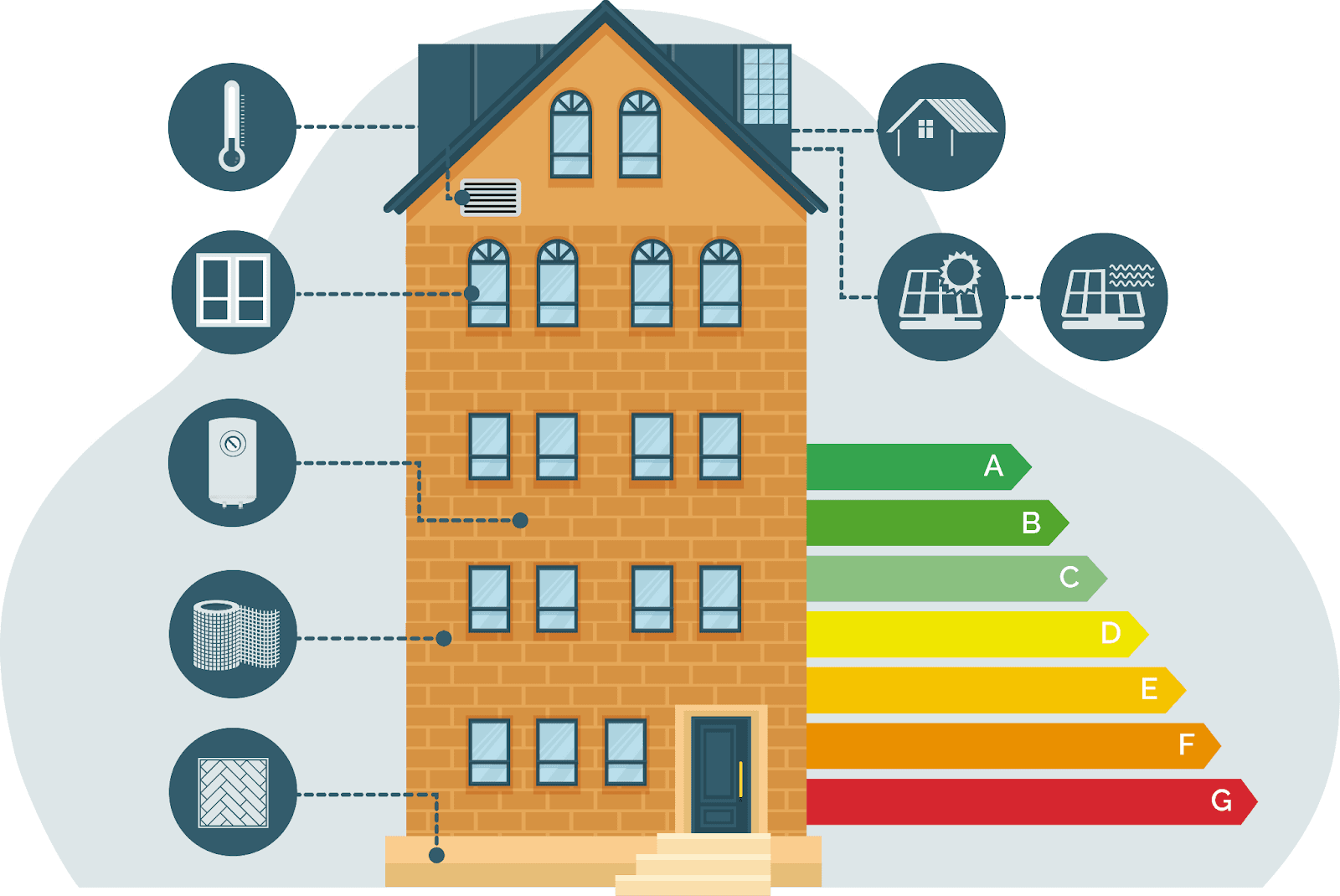
From static energy reports to active operational tools
When energy labels are activated in daily operations, they can create real value, such as:
Reduced environmental impact
Strengthened documentation for investors
Easier compliance with regulatory requirements
A more future-proof property portfolio
At Upsite, the ambition is not only to help the industry comply with the rules. The goal is also to make it easier to work strategically, data-driven, and targeted with energy optimization as a natural part of modern property management.
Energy initiatives and CO₂ footprint need to get out of the PDF and into operations - not just as a requirement, but as a qualitative management tool, says Søren Schødt, founder of Upsite.

Energy initiatives and CO₂ data directly into tasks
To make energy labels more useful in practice, Upsite has strengthened the link between data and operations. Energy-improving initiatives from the energy label can be integrated directly into task management, and a new function makes it possible to link both energy-saving initiatives and CO₂ footprint to individual tasks via the task management tool.
This means that property owners can more easily:
Translate insights from energy labels into concrete actions
Visualize savings potential
Plan energy improvements as part of the maintenance strategy
The result is a better decision-making basis and a more efficient way to work strategically with both CO₂ reduction and operational optimization.